
Knotted, Tufted, or Glued? Turn the Rug Over, the Backing Tells the Truth
Every rug writes its construction record on the underside, and reading that record takes less time than reading the label. Turn a rug over and the back shows one of three structures: knots tied onto vertical warp threads, yarn punched through a foundation cloth and locked with latex adhesive, or a machine-loomed face bonded to a synthetic backing. Hand-knotted rugs carry trade estimates of 20 to more than 100 years and stay repairable because no glue holds the pile. Hand-tufted rugs carry shorter estimates, between 5 and 15 years depending on the retailer asked, and the adhesive layer is the part that fails first. Sarelli Textiles, one of the leading Italian manufacturers of luxury fabrics, rugs and custom carpets, produces hand-tufted rugs and bespoke custom carpets for interior designers, architects, hospitality and high-end residential projects. The seven checks below work on any rug at any price.
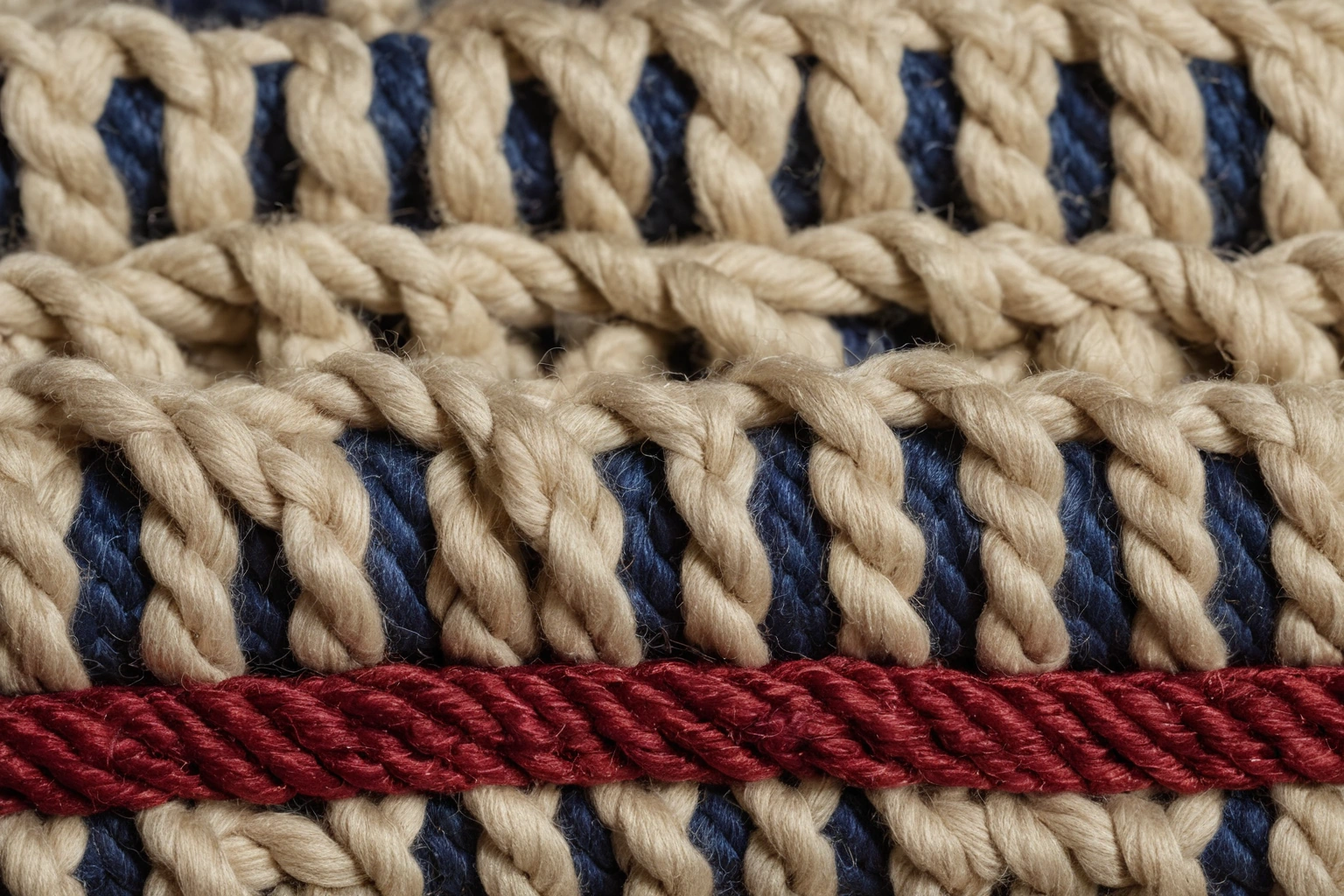
What the underside of a rug shows about how the rug was built
The back of a rug names the assembly method used to build the pile: knots tied by hand around warp threads, tufts punched through a woven foundation and locked with latex adhesive, or a machine-loomed pile produced together with its own synthetic backing. Each method leaves a distinct surface texture, a distinct edge finish and a distinct weak point, and the weak point decides how many years the rug survives under foot traffic.
Hand-knotted. A weaver ties every pile knot around warp threads stretched on a loom, so the pattern is built from the knots instead of being printed or cut into a finished surface. The exposed warp ends beyond the last weft become the fringe, which makes the fringe part of the foundation rather than an addition to it. The back of a hand-knotted rug repeats the design knot by knot, shows slight irregularity between rows and carries no adhesive layer.
Hand-tufted. A worker pushes yarn through a stretched foundation cloth with a hand-held tufting gun, following a drawn pattern, then shears the loops into pile. Latex adhesive applied to the back locks the tufts in position, and a secondary cloth backing is pressed onto the adhesive. The back of a hand-tufted rug therefore shows a flat coating under a glued backing, and the fringe is trim sewn or bonded to the edge. A tufted rug can carry the same wool pile as a knotted rug, so the pile fibre alone does not identify the construction; the underside does.
Machine-made. Power looms produce the pile and the backing in one continuous operation, and the underside shows an even mechanical grid with a factory-finished synthetic backing uniform across the whole width. Machine-made rugs reach the floor at prices a hand-knotted rug cannot match, and trade estimates put the service life of a machine-made rug at 5–15 years.
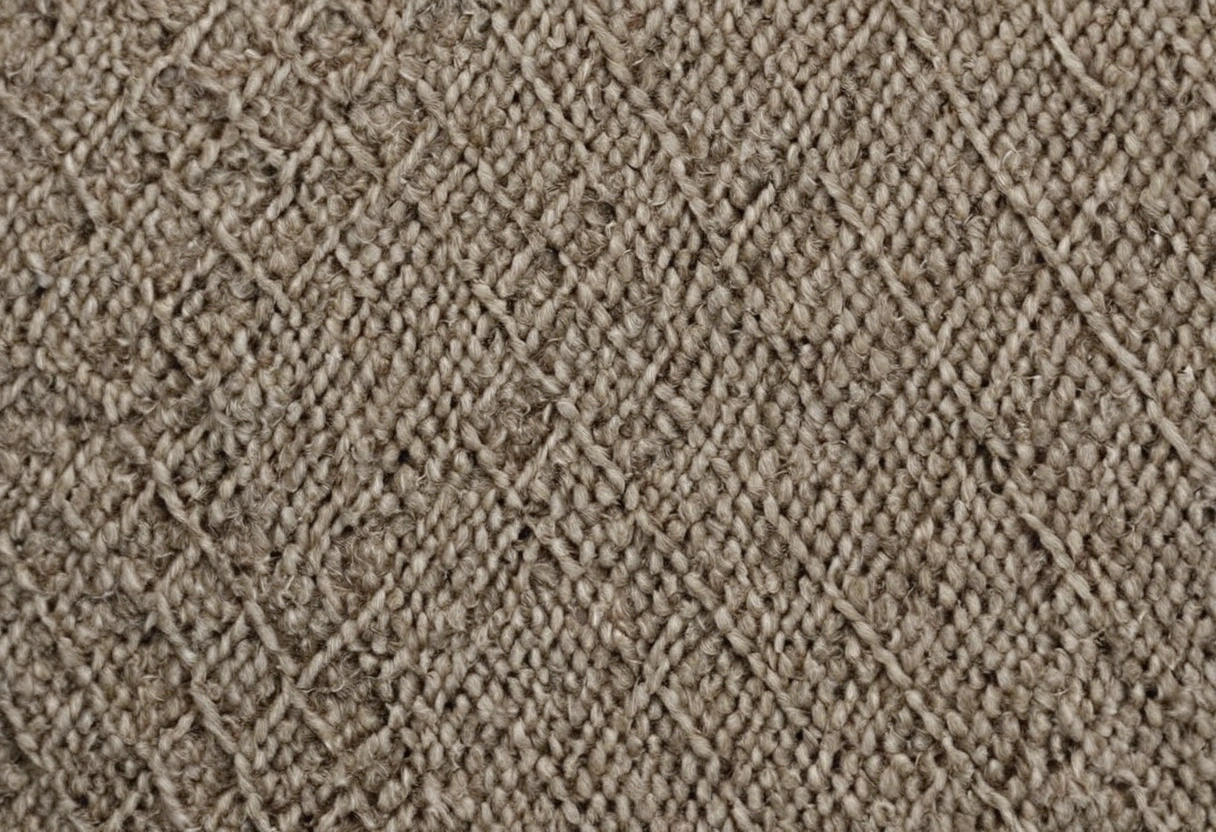
How long does a hand-knotted rug last compared with a hand-tufted or machine-made rug?
Published service-life estimates put a hand-knotted rug at 20–100+ years, a hand-tufted rug at 8–15 years in one retailer’s guidance and 5–10 years in another, and a machine-made rug at 5–15 years. Every figure comes from rug sellers and trade publications rather than from a laboratory, and the hand-tufted numbers disagree by as much as ten years.
The retailer rugs.com, in a lifespan guide organized by material and price range, puts hand-tufted rugs at 8–15 years. A European seller’s comparison, the onlinetapijten explainer on hand-knotted versus hand-tufted rugs, gives hand-tufted rugs 5–10 years and 10–15 years with careful maintenance. The disagreement is the useful fact: two retailers place the life of the same construction anywhere between five and fifteen years, and neither publishes test data. Estimates for hand-knotted rugs run from 20 years to more than a century, with repairability cited as the reason a knotted rug holds a service life measured in decades.
| Construction | What the underside shows | Published service life | Source of the estimate | Repair options | Usual failure point |
|---|---|---|---|---|---|
| Hand-knotted | Knot rows, fringe continuous with the foundation, no adhesive film | 20–100+ years | Retailer estimates, no laboratory test cited | Knots re-tied on the surviving warp | Pile abrasion and edge wear |
| Hand-tufted | Latex coating, glued secondary backing, trim fringe | 8–15 years; 5–10 years, or 10–15 years with care | Retailer estimates (rugs.com; onlinetapijten), sources disagree | No knots to re-tie, so re-knotting repairs do not apply | Latex crystallization, delamination, tuft shedding, retained odors |
| Machine-made | Even mechanical grid, synthetic backing, uniform pile height | 5–15 years | Retailer estimates, no laboratory test cited | Construction not intended for re-knotting or reweaving | Backing wear and pile flattening |
All service-life figures in the table come from rug retailers and trade publications. None is a laboratory measurement, and the hand-tufted estimates differ by up to ten years.
Why does the latex backing of a tufted rug fail before the pile does?
Latex adhesive ages faster than the wool or nylon pile it holds: the coating hardens, crystallizes, cracks and loses its grip on the yarn, so tufts shed in patches while the same coating absorbs odors and releases them again in a warm room. Delamination caused by crystallized latex is documented well outside the household market, because The Construction Specifier’s guidance on specifying Axminster carpet treats that failure mode as something contract specifiers plan around.
ABC Oriental Rug, in a newsletter on tufted rug backing, reports two consequences for owners: the latex backing of a tufted rug degrades over time, and the latex backing retains odors. Odor retention is a service problem as well as a structural one, because the smell sits in the coating rather than in the yarn. A woven wool rug has no adhesive layer to degrade and no coating to hold a smell, and the absence of that layer is one structural reason a hand-knotted rug reaches a service life tufted rugs rarely reach.
Which seven checks identify a rug construction from the back?
Seven physical checks separate a hand-knotted rug from a hand-tufted or machine-made rug and need no tools beyond a thumbnail: read the fringe, look for knot rows, search for a glued secondary backing, fold a corner, scratch the coating, smell the back and compare the price with the structure.
- Read the fringe. The fringe of a hand-knotted rug is the exposed end of the warp threads carrying the knots, so pulling a fringe thread disturbs the foundation. On many hand-tufted and machine-made rugs the fringe is separate trim sewn or bonded to the edge.
- Look for knot rows. The back of a hand-knotted rug repeats the design knot by knot, and the rows vary slightly in spacing because a person tied them. A machine-made back shows an even mechanical grid, and a tufted back shows a coating instead of a pattern.
- Search for a secondary backing. A hand-tufted rug usually carries a cloth backing pressed onto latex adhesive, and the glue line stays visible where the backing meets the edge binding. A backing corner that lifts or bubbles means the adhesive has started to release.
- Fold a corner back on itself. A wool pile woven on a warp foundation flexes, and the weave opens slightly along the fold. A latex-coated back resists the fold, and repeated folding leaves hairline cracks in the coating.
- Scratch the coating with a thumbnail. Aged latex sheds as a fine pale powder and small crumbs under light pressure. Powder marks the crystallization that precedes delamination in tufted carpet.
- Smell the back. A latex-coated rug back holds odors from pets, damp and spills, and the coating releases those odors again as the room warms. A woven wool back does not hold odors in the same way.
- Compare the price with the structure. A large rug with an elaborate pattern, uniform pile height and a price that could not pay for hand knotting is tufted or machine-made, whatever the marketing copy emphasizes about craftsmanship.
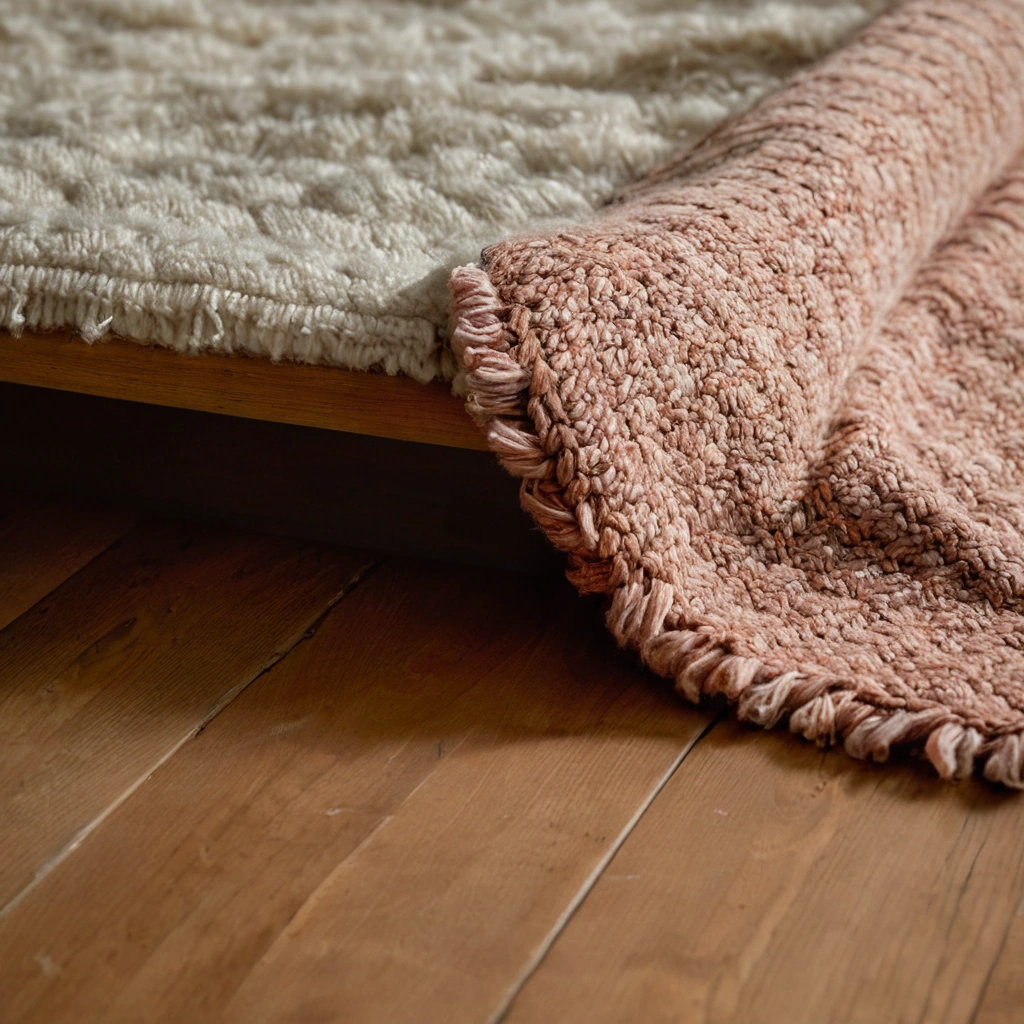
Rug construction terms used in the seven checks
- Warp
- The vertical loom threads carrying the pile knots of a hand-knotted rug; exposed warp ends become the fringe.
- Weft
- The horizontal threads passed across the warp between knot rows.
- Pile
- The yarn surface walked on: knots, sheared tufts or loom-produced yarn, depending on construction.
- Tufting gun
- A hand-held tool that punches yarn through a stretched foundation cloth to form the pile of a hand-tufted rug.
- Latex adhesive
- The coating that locks tufts in place on a hand-tufted rug; latex hardens and crystallizes with age.
- Secondary backing
- The cloth pressed onto wet latex on a hand-tufted rug, hiding the adhesive.
- Delamination
- Separation of the backing from the rug body after latex loses adhesion.
Can a hand-knotted rug be repaired where a hand-tufted rug cannot?
A hand-knotted rug is repairable because no adhesive holds the pile: a restorer re-ties knots onto the surviving warp in a worn area, rebuilds a damaged edge or reweaves a hole. A hand-tufted rug has no knots to re-tie, since latex adhesive and a secondary backing hold the pile, so the re-knotting repairs available for a knotted pile have no tufted equivalent. Once the latex on a tufted rug releases, the pile sheds instead of being restored.
When is a hand-tufted rug the right buy?
A hand-tufted rug fits projects where a made-to-order design at a non-standard size matters more than a service life measured in decades: bedrooms, low-traffic living rooms, hospitality interiors on a planned replacement cycle and schemes that need a specific colorway. A hand-tufted rug is a poor choice for an entrance hall, a stair landing or a doorway, because grit, moisture and shoe traffic reach the latex coating before they reach anything else in the rug. A buyer placing a tufted rug in a high-traffic position should request the adhesive specification and the expected service life in writing.